
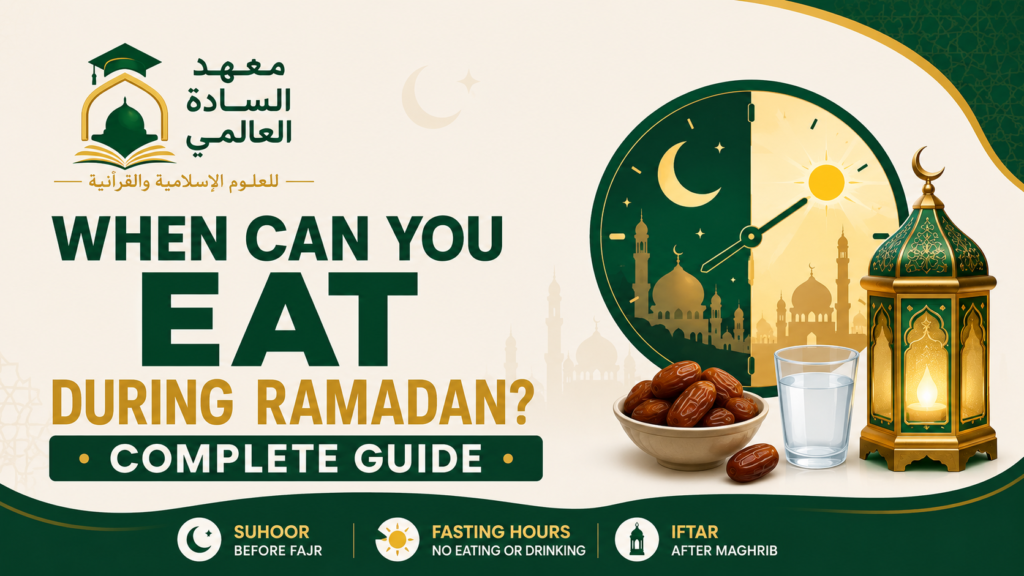
Ramadan is the month in which Muslims fast every day from dawn until sunset. One of the most common questions asked by both Muslims and non-Muslims is: when can you eat during Ramadan? Understanding the correct eating times is essential because fasting is closely connected to specific prayer times and Islamic guidelines.
This guide explains exactly when eating is allowed during Ramadan, the role of Suhoor and Iftar, what the Quran and Sunnah teach about fasting times, and common mistakes to avoid.
Quick Answer: When Can You Eat During Ramadan?
Muslims can eat and drink during Ramadan from sunset (Maghrib) until dawn (Fajr). The meal before dawn is called Suhoor, while the meal after sunset is called Iftar. Once Fajr begins, fasting starts, and eating and drinking are no longer allowed until Maghrib.
In simple terms:
- Eat before Fajr (Suhoor)
- Fast throughout the day
- Break the fast at Maghrib (Iftar)
- Continue eating and drinking during the night until the next Fajr
Featured Snippet Answer
Muslims may eat and drink during Ramadan between Maghrib (sunset) and Fajr (dawn). Suhoor is eaten before Fajr begins, and Iftar starts immediately after sunset. The daily fast lasts from Fajr until Maghrib, during which eating and drinking are not permitted.
Understanding Ramadan Fasting Times
What Is Ramadan Fasting?
Fasting in Ramadan, known as Sawm, is one of the Five Pillars of Islam. During Ramadan, adult Muslims abstain from food, drink, and other actions that break the fast from dawn until sunset.
The fast is not simply about avoiding food. It is an act of worship that teaches self-discipline, gratitude, patience, and closeness to Allah.
Why Timing Matters in Islam
Islam places great importance on following the correct times for acts of worship. Just as the five daily prayers have specific times, fasting also has a defined beginning and ending time.
Starting the fast too late or breaking it too early affects the validity of the fast. Therefore, every Muslim should understand the correct Ramadan meal times.
When Can You Eat During Ramadan?
The answer is found clearly in the Quran.
Allah says:
“Eat and drink until the white thread of dawn becomes distinct to you from the black thread [of night]. Then complete the fast until the night.”
(Surah Al-Baqarah 2:187)
This verse establishes the daily fasting schedule:
| Time | Eating Allowed? |
| Night | Yes |
| Before Fajr | Yes |
| After Fajr | No |
| Daytime | No |
| Sunset (Maghrib) | Yes |
Eating Between Maghrib and Fajr
The eating window during Ramadan begins when the sun sets and Maghrib enters. Muslims may eat, drink, and resume normal activities throughout the night.
This period continues until the arrival of Fajr, when fasting begins again.
What Is Suhoor?
Meaning of Suhoor
Suhoor is the pre-dawn meal eaten before the start of the daily fast.
It is a highly recommended Sunnah and serves as preparation for the fasting day ahead.
Many Muslims wake up before dawn to eat a nutritious meal and drink sufficient water before fasting begins.
When Does Suhoor End?
Suhoor ends when Fajr time starts.
As soon as the Fajr prayer time enters, eating and drinking must stop.
Many Islamic calendars include a precautionary time called Imsak, which occurs a few minutes before Fajr. While it encourages preparation, the actual cutoff for eating is the beginning of Fajr.
Can You Eat Until Fajr?
Yes. According to the Quran, Muslims may eat and drink until the arrival of true dawn (Fajr).
However, it is wise not to wait until the final second. Finishing a few minutes early helps avoid uncertainty.
The Importance and Benefits of Suhoor
Spiritual Benefits
Suhoor is more than a meal. It is an opportunity to:
- Remember Allah before dawn
- Make dua
- Recite Quran
- Prepare mentally for fasting
Physical Benefits
A balanced Suhoor can:
- Maintain energy levels
- Reduce fatigue
- Improve concentration
- Help with hydration
- Support healthy fasting
Sunnah of Suhoor
The Prophet Muhammad ﷺ encouraged Muslims to eat Suhoor.
He taught that there is blessing (barakah) in the pre-dawn meal.
Even a small meal or a few dates can fulfill the Sunnah.
What Is Iftar?
Meaning of Iftar
Iftar is the meal used to break the fast after sunset.
It marks the completion of the day’s fast and is one of the most anticipated moments of Ramadan.
When Does Iftar Start?
Iftar begins immediately after sunset when Maghrib enters.
The fast ends as soon as the sun sets.
There is no requirement to wait for darkness or delay breaking the fast.
Why Muslims Break the Fast at Sunset
The Prophet ﷺ encouraged Muslims to hasten Iftar once sunset occurs.
This practice demonstrates obedience to Allah and adherence to the Sunnah.
Sunnah Practices of Iftar
Foods Commonly Used to Break the Fast
The Prophet ﷺ often broke his fast with:
- Fresh dates
- Dry dates
- Water
Today, Muslims around the world follow this Sunnah before eating a larger meal.
Dua at Iftar
Many Muslims make dua when breaking their fast because it is a blessed moment for supplication.
Iftar is also a time of gratitude, reflection, and remembrance of Allah.
Ramadan Daily Fasting Schedule Explained
The exact times change depending on location and date, but the daily routine follows the same pattern.
| Time Period | Activity |
| Before Fajr | Suhoor |
| Fajr | Fast Begins |
| Morning | Fasting Continues |
| Afternoon | Fasting Continues |
| Sunset (Maghrib) | Iftar |
| Evening | Prayer, Worship, Meals |
| Night | Eating Allowed |
This schedule repeats each day throughout Ramadan.
Suhoor vs Iftar
| Feature | Suhoor | Iftar |
| Timing | Before Fajr | At Maghrib |
| Purpose | Prepare for fasting | Break the fast |
| Status | Sunnah | Sunnah |
| Importance | Provides strength | Ends daily fast |
| Associated Prayer | Fajr | Maghrib |
Understanding the difference helps Muslims follow the Ramadan fasting schedule correctly.
How to Find Accurate Suhoor and Iftar Times in Your City
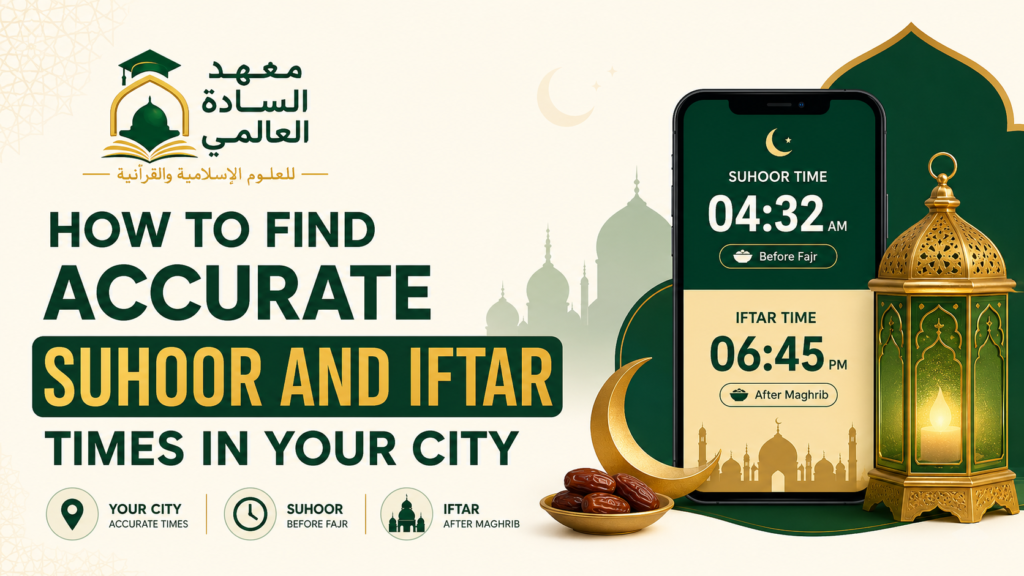
Because fasting times vary throughout the world, Muslims should rely on trusted sources.
Local Mosque Timetables
Most mosques publish Ramadan calendars showing:
- Fajr times
- Maghrib times
- Daily fasting schedules
Islamic Apps
Many Islamic apps provide:
- Prayer times
- Ramadan schedules
- Suhoor reminders
- Iftar alerts
Verified Prayer Time Websites
Trusted prayer-time services can help determine accurate fasting hours based on your location.
Always verify that the calculation method matches your local Islamic authority.
Common Mistakes About Eating Times During Ramadan
Mistake #1: Thinking Fasting Starts at Sunrise
This is one of the most common misunderstandings.
Fasting begins at Fajr, not sunrise.
Fajr occurs before sunrise.
Mistake #2: Delaying Iftar Unnecessarily
Some people assume waiting longer brings extra reward.
The Sunnah teaches Muslims to break the fast promptly once sunset occurs.
Mistake #3: Ignoring Local Prayer Times
Using incorrect prayer schedules can result in starting or ending the fast at the wrong time.
Always check accurate local timings.
Mistake #4: Skipping Hydration at Night
The eating period between Maghrib and Fajr should also be used to maintain proper hydration.
What Happens If You Accidentally Eat After Fajr?
If someone knowingly continues eating after Fajr begins, the fast may be invalid and require making up that day according to scholarly rulings.
However, if a person genuinely did not know Fajr had entered or made an honest mistake, scholars discuss the matter based on the circumstances and evidence available.
For specific situations, it is best to consult a qualified local scholar.
Practical Example of a Ramadan Day
Imagine a Muslim living in a city where:
- Fajr is at 4:30 AM
- Maghrib is at 7:15 PM
The daily routine would look like this:
| Time | Action |
| 4:00 AM | Eat Suhoor |
| 4:30 AM | Stop eating and begin fasting |
| Daytime | Continue fasting |
| 7:15 PM | Break fast with Iftar |
| Evening | Dinner, worship, family time |
This simple example helps illustrate the beginning and end of the daily fast.
Common Misconceptions About Ramadan Eating Times
“Fasting Begins at Sunrise”
Incorrect.
Fasting begins at Fajr, which occurs before sunrise.
“Suhoor Is Mandatory”
Incorrect.
Suhoor is highly recommended but not obligatory.
A fast remains valid without Suhoor.
“Delaying Iftar Is Better”
Incorrect.
The Sunnah encourages breaking the fast promptly after sunset.
“You Cannot Drink Water Until Dawn”
Incorrect.
Water may be consumed freely before Fajr begins.
Tips for Managing Ramadan Meal Times
Plan a Balanced Suhoor
Include:
- Protein
- Whole grains
- Fruits
- Water
These foods help maintain energy throughout the day.
Avoid Excessive Salt
Salty foods can increase thirst during fasting hours.
Do Not Overeat at Iftar
Breaking the fast gradually helps avoid discomfort and supports healthy digestion.
Follow Local Prayer Times
Always rely on verified Ramadan schedules for your city.
Frequently Asked Questions
Does fasting start at sunrise or Fajr?
Fasting begins at Fajr, not sunrise.
Can I drink water until Fajr?
Yes. Drinking is allowed until Fajr enters.
Is Suhoor mandatory?
No. Suhoor is Sunnah and highly recommended but not obligatory.
Can I skip Suhoor?
Yes, the fast remains valid. However, it is better to eat Suhoor because of its blessings and benefits.
When should I break my fast?
Immediately after sunset when Maghrib begins.
Can I delay Iftar?
You may delay eating, but the Sunnah is to break the fast promptly after sunset.
How long is the Ramadan fast each day?
The length varies according to location and season because fasting lasts from Fajr until Maghrib.
What if I forget and eat while fasting?
According to authentic Hadith, if a fasting person genuinely forgets and eats or drinks, the fast remains valid because it was unintentional.
Key Takeaways
- Muslims can eat during Ramadan between Maghrib and Fajr.
- Suhoor is the pre-dawn meal before fasting begins.
- Iftar is the meal used to break the fast at sunset.
- Fasting starts at Fajr, not sunrise.
- Fasting ends at Maghrib, not later in the evening.
- Following accurate prayer times is essential.
- Suhoor and Iftar are important Sunnah practices.
- Understanding Ramadan meal times helps Muslims fast correctly and confidently.
Conclusion
Knowing when you can eat during Ramadan is one of the most important aspects of observing the fast correctly. Islam clearly teaches that eating and drinking are permitted from sunset until dawn. The daily fast begins with Fajr and ends with Maghrib, making Suhoor and Iftar central parts of the Ramadan experience.
By understanding the correct fasting schedule, following authentic Islamic guidance, and observing the Sunnah of Suhoor and Iftar, Muslims can approach Ramadan with confidence, gratitude, and a deeper connection to Allah.
To continue your Islamic learning journey, you may also like our guides on [Can You Recite Ayatul Kursi in Salah? Islamic Ruling Explained], [Why Surah Fatiha Is Called Ummul Quran:The Mother of the Quran], and [ARTICLE 3]. Exploring related topics can help you build a stronger understanding of Islam, the Quran, and everyday Islamic practices.