
Introduction
Ramadan is a month of fasting, worship, self-discipline, and spiritual growth. During this blessed month, Muslims strive to strengthen their relationship with Allah, increase acts of worship, and avoid distractions that may reduce the spiritual benefits of fasting.
One common question many Muslims ask is: Can you listen to music during Ramadan? Some wonder whether listening to songs breaks the fast, while others want to know the Islamic ruling on music and whether it affects the rewards of fasting.
The answer requires understanding two separate issues:
- Does listening to music invalidate the fast?
- Is listening to music compatible with the spiritual goals of Ramadan?
This article explores what Islam says about music during Ramadan, scholarly viewpoints, the impact of music on fasting, and practical alternatives that can help Muslims make the most of this sacred month.
Quick Answer: Can You Listen to Music During Ramadan?
Listening to music does not break your fast according to mainstream Islamic scholarship because it is not one of the actions that invalidate fasting, such as eating, drinking, or marital relations during fasting hours.
However, many scholars advise Muslims to avoid music during Ramadan because the month is intended for worship, Quran recitation, remembrance of Allah, and spiritual purification. Even when something does not invalidate the fast, it may still reduce a person’s spiritual focus and reward.
For this reason, many Muslims choose to replace music with Quran recitation, Islamic lectures, dhikr, and beneficial reminders throughout Ramadan.
Featured Snippet Answer
Listening to music does not break a Ramadan fast according to Islamic scholars. However, many scholars recommend avoiding music during Ramadan because the month is dedicated to worship, Quran recitation, and spiritual growth. Muslims are encouraged to focus on activities that strengthen faith and maximize the rewards of fasting.
Does Listening to Music Break Your Fast?
This is one of the most searched Ramadan questions.
The simple answer is:
No, listening to music does not invalidate the fast.
The actions that clearly break a fast include:
- Eating intentionally
- Drinking intentionally
- Sexual relations during fasting hours
- Other matters discussed in Islamic jurisprudence
Listening to music is not listed among the things that invalidate fasting.
What Invalidates a Fast?
Islamic scholars explain that fasting is invalidated by specific actions defined in Islamic law. These actions are related primarily to physical acts that contradict the conditions of fasting.
Because listening to music is not among those acts, a person’s fast remains valid.
Difference Between Breaking a Fast and Reducing Rewards
Many Muslims confuse these two issues.
There is a major difference between:
| Action | Breaks Fast? | May Affect Rewards? |
| Eating intentionally | Yes | Yes |
| Drinking intentionally | Yes | Yes |
| Backbiting | No | Yes |
| Lying | No | Yes |
| Music | No | According to many scholars, it may reduce spiritual benefits |
| Quran recitation | No | Increases rewards |
| Dhikr | No | Increases rewards |
A fast can remain valid while certain actions reduce its spiritual rewards.
The Spiritual Purpose of Ramadan
To understand why scholars discuss music during Ramadan, it is important to understand the purpose of fasting itself.
Allah says in Surah Al-Baqarah (2:183):
“Fasting has been prescribed for you as it was prescribed for those before you so that you may attain taqwa.”
The goal of Ramadan is not simply abstaining from food and drink. The deeper purpose is developing:
- Taqwa (God-consciousness)
- Self-control
- Sincerity
- Patience
- Stronger worship habits
Developing Taqwa
Taqwa means being conscious of Allah in daily life and striving to obey Him.
Ramadan provides a unique opportunity to:
- Leave harmful habits
- Improve character
- Increase worship
- Strengthen faith
Because of this, Muslims are encouraged to evaluate how they spend their time and what influences their hearts.
Strengthening Worship During Ramadan
The most beneficial activities in Ramadan include:
- Quran recitation
- Salah
- Taraweeh prayers
- Dhikr
- Dua
- Charity
- Seeking Islamic knowledge
The more time devoted to these activities, the greater the spiritual benefit.
What Is the Islamic View on Music?
The topic of music has been discussed by scholars for centuries.
There are differing scholarly discussions regarding certain forms of music and entertainment. However, many classical scholars considered musical instruments and songs to be impermissible or discouraged based on their understanding of Quranic verses and hadith evidence.
At the same time, some contemporary scholars differentiate between:
- Types of music
- Lyrics
- Purpose
- Context
- Content
This explains why Muslims may hear different opinions on the subject.
Quran References
Some scholars cite verses discussing idle speech and distractions from the remembrance of Allah when discussing music. However, interpretations vary, and these verses are part of broader scholarly discussions rather than explicit references to music itself.
Therefore, Muslims should consult qualified scholars when seeking detailed rulings.
Hadith References
Several hadith are frequently cited in discussions about music and musical instruments. Scholars differ regarding the interpretation and application of these narrations.
Because of these scholarly differences, it is important to avoid oversimplifying the issue and to seek reliable Islamic knowledge.
General Scholarly Opinions
Broadly speaking, scholarly discussions often fall into three categories:
View 1: Music Is Generally Impermissible
Many classical scholars held that music involving instruments should be avoided.
View 2: Some Forms May Be Permissible
Some scholars distinguish between acceptable and unacceptable forms of audio content.
View 3: Context Matters
Others focus heavily on:
- Lyrics
- Effects on behavior
- Moral influence
- Religious obligations
Despite these differences, scholars generally agree that Ramadan should be a time of increased worship and reduced distractions.
Is Music Allowed During Ramadan?
This question is often asked in a Ramadan-specific context.
Even among Muslims who follow more lenient opinions regarding music during the rest of the year, many choose to reduce or completely avoid music during Ramadan.
Why?
Because Ramadan is a unique month dedicated to spiritual renewal.
Why Many Scholars Advise Avoiding It
Scholars often encourage Muslims to ask:
- Does this bring me closer to Allah?
- Does this improve my worship?
- Does this help me benefit from Ramadan?
If a habit distracts from worship, reducing it may help maximize the blessings of the month.
Spiritual Focus During Ramadan
A person has limited time each day.
Every hour spent during Ramadan can be used for:
- Quran recitation
- Reflection
- Learning Islam
- Making dua
- Family worship
Many Muslims find that replacing entertainment with beneficial activities helps them experience Ramadan more deeply.
Does Music Affect Ramadan Rewards?
Many scholars explain that while music does not invalidate the fast, certain actions can affect the spiritual quality of fasting.
The Prophet ﷺ emphasized that fasting is more than avoiding food and drink.
A believer should also strive to avoid:
- Harmful speech
- Arguments
- Backbiting
- Sinful behavior
- Unnecessary distractions
For this reason, scholars encourage Muslims to fill Ramadan with activities that increase reward rather than potentially decrease it.
Scholarly Opinions on Music During Ramadan
Classical Perspectives
Many classical scholars viewed music as something Muslims should avoid generally, including during Ramadan.
From this perspective, Ramadan should involve even greater caution because of its sacred nature.
Contemporary Discussions
Some modern scholars discuss:
- Educational content
- Background audio
- Vocal-only nasheeds
- Beneficial media
These discussions often focus on whether the content promotes good values or distracts from worship.
Regardless of the detailed ruling, most scholars agree that Ramadan should be centered on worship and remembrance of Allah.
Music vs Nasheeds During Ramadan
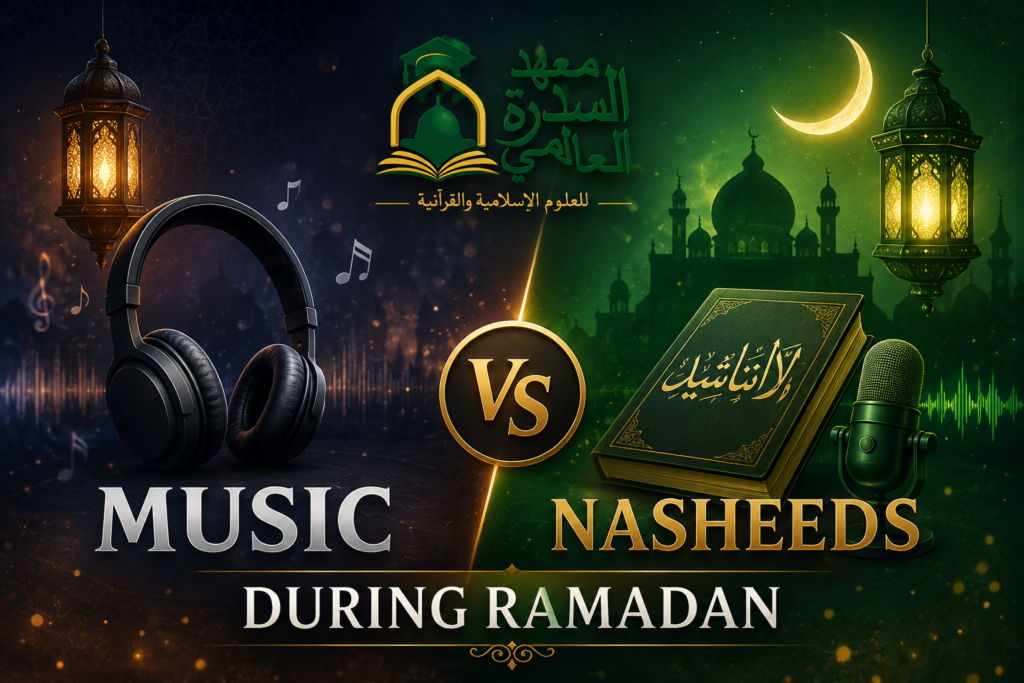
Many Muslims choose nasheeds as an alternative.
Key Differences
| Audio Type | Purpose | Ramadan Suitability |
| Popular Music | Entertainment | Subject to scholarly discussion |
| Instrumental Music | Entertainment | Subject to scholarly discussion |
| Nasheeds | Reminders and inspiration | Often preferred |
| Quran Recitation | Worship | Highly encouraged |
| Islamic Lectures | Learning | Highly encouraged |
When Nasheeds May Be Preferred
Many Muslims listen to nasheeds because they:
- Encourage positive reminders
- Promote Islamic values
- Help maintain a Ramadan atmosphere
- Can motivate worship and good character
However, Quran recitation remains superior as a source of spiritual benefit.
Activities to Replace Music During Ramadan
If you wish to reduce music during Ramadan, there are many beneficial alternatives.
Quran Recitation
Reading and listening to the Quran is among the greatest acts of worship during Ramadan.
Benefits include:
- Spiritual tranquility
- Increased reward
- Greater understanding of Islam
Dhikr
Simple phrases such as:
- SubhanAllah
- Alhamdulillah
- Allahu Akbar
- La ilaha illa Allah
can transform spare moments into opportunities for reward.
Islamic Lectures
Beneficial lectures may help Muslims:
- Learn new knowledge
- Improve faith
- Understand Ramadan better
Beneficial Islamic Podcasts
Many Muslims enjoy listening to beneficial Islamic podcasts during:
- Commutes
- Exercise
- Household tasks
This allows them to learn while staying productive.
Common Misconceptions About Music and Fasting
Misconception 1: Music Automatically Breaks the Fast
Incorrect.
Listening to music does not invalidate fasting.
Misconception 2: One Song Makes the Entire Fast Invalid
Incorrect.
The fast remains valid.
Misconception 3: Ramadan Is Only About Avoiding Food
Incorrect.
Ramadan is about spiritual purification and growth.
Misconception 4: Worship Only Happens in the Mosque
Incorrect.
Acts of worship can occur:
- At home
- At work
- During travel
- Throughout the day
Ramadan Dos and Don’ts for Spiritual Growth
Recommended Actions
Read Quran daily
Pray on time
Make frequent dua
Give charity
Attend Taraweeh
Learn Islamic knowledge
Increase dhikr
Actions to Minimize
Excessive entertainment
Backbiting
Arguments
Wasting time
Neglecting prayers
Harmful speech
Frequently Asked Questions
Can Muslims listen to music while fasting?
Yes, listening to music does not invalidate the fast. However, many scholars advise avoiding it to maximize the spiritual benefits of Ramadan.
Can I listen to songs after iftar?
The fasting hours have ended after iftar, but the broader scholarly discussion regarding music remains the same. Muslims should follow knowledgeable scholars they trust and strive for activities that bring them closer to Allah.
Does music reduce fasting rewards?
Many scholars believe that unnecessary distractions and sinful activities can reduce the spiritual rewards of fasting even when the fast remains valid.
Are nasheeds allowed during Ramadan?
Many scholars permit certain forms of nasheeds, particularly those that encourage good character and remembrance of Allah. Specific rulings may vary.
Can I listen to music while reading Quran?
Muslims should give the Quran full attention and respect. Combining Quran recitation with music is generally discouraged because it can distract from reflection and concentration.
Is instrumental music different from songs?
This is one of the areas where scholarly opinions differ. Muslims should consult qualified scholars and follow authentic Islamic guidance.
Key Takeaways
- Listening to music does not break a Ramadan fast.
- The validity of fasting and the rewards of fasting are separate issues.
- Many scholars encourage Muslims to avoid music during Ramadan to increase spiritual focus.
- Ramadan is a time for worship, Quran recitation, and self-improvement.
- Replacing music with Quran, dhikr, lectures, and beneficial reminders can help maximize Ramadan’s blessings.
- Muslims should seek knowledge from qualified scholars and avoid oversimplifying scholarly discussions.
Conclusion
The question of whether you can listen to music during Ramadan involves both Islamic rulings and personal spiritual goals. While listening to music does not invalidate the fast according to mainstream scholarship, many scholars encourage Muslims to use Ramadan as an opportunity to reduce distractions and focus on worship.
The blessed month of Ramadan comes only once each year. By dedicating more time to the Quran, prayer, remembrance of Allah, and beneficial knowledge, Muslims can strengthen their faith and make the most of this precious season of mercy and forgiveness.
To continue your Islamic learning journey, you may also like our guides on [Challenges in Learning Tajweed: Causes, Difficulties, and Solutions], [Surah Kahf First 10 Verses | Arabic, English & Benefits], and [Benefits of Reciting Surah Fatiha in Daily Life and Islam]. Exploring related topics can help you build a stronger understanding of Islam, the Quran, and everyday Islamic practices.