
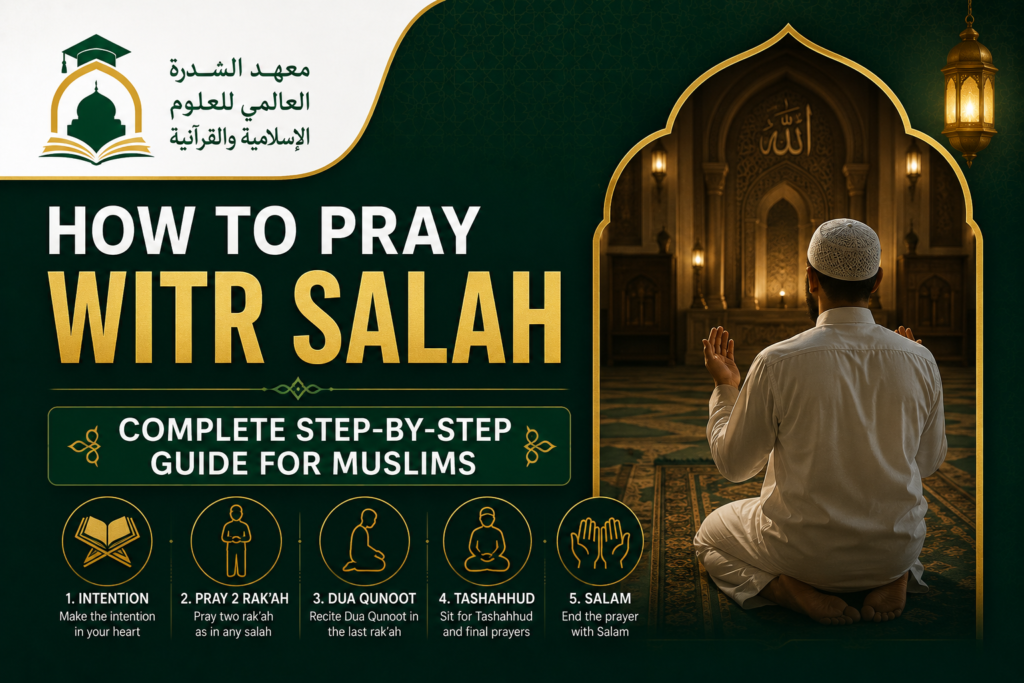
Quick Answer: How To Pray Witr Salah?
Witr Salah is a special night prayer performed after Isha and before Fajr. In the Hanafi school, Witr consists of three rakats. After reciting Surah Al-Fatihah and another surah in the third rakat, the worshipper raises their hands, says “Allahu Akbar,” recites Dua Qunoot, and then completes the prayer with ruku, sujood, and tasleem. Witr should ideally be the last prayer of the night.
What Is Witr Salah?
Witr Salah is an important night prayer offered between Isha and Fajr. The word “Witr” means “odd,” referring to the odd number of rakats in which this prayer is performed.
It holds a special place in Islamic worship and was consistently observed by Prophet Muhammad ﷺ throughout his life. Because of its importance, Muslims are encouraged not to neglect it, even when traveling.
Why Is It Called Witr?
The Arabic word witr means “odd” or “single.” The prayer is called Witr because it is offered in an odd number of rakats, such as one, three, five, seven, or more according to different scholarly opinions.
The Importance of Witr Salah in Islam
Witr Salah is among the most emphasized prayers after the obligatory daily prayers. It serves as a beautiful way to conclude a Muslim’s daily worship.
The Prophet Muhammad ﷺ encouraged believers to make Witr their final prayer at night. This highlights its significance and distinguishes it from other voluntary prayers.
Virtues of Witr Prayer
- It completes a Muslim’s night worship.
- It follows the example of Prophet Muhammad ﷺ.
- It strengthens a believer’s connection with Allah.
- It provides an opportunity for sincere supplication through Dua Qunoot.
- It helps establish consistency in daily worship.
Hadith About Witr
The Prophet Muhammad ﷺ said:
“Make the last of your prayers at night Witr.”
This authentic narration demonstrates the importance of ending the night with Witr prayer whenever possible.
When To Perform Witr Prayer
One of the most common questions is about the correct time for Witr Salah.
Witr Prayer Time
The time for Witr begins immediately after Isha prayer and continues until the beginning of Fajr prayer.
Witr After Isha
A Muslim may pray Witr directly after Isha if they do not expect to wake up later during the night.
Witr Before Fajr
Witr must be completed before the Fajr prayer begins. Once Fajr time enters, the time for Witr ends.
Witr With Tahajjud
If a person regularly wakes up for Tahajjud, it is recommended to delay Witr until after completing Tahajjud so that Witr becomes the final prayer of the night.
Witr Timing Summary
| Situation | Recommended Action |
| Sleeping early | Pray Witr after Isha |
| Unsure about waking for Tahajjud | Pray Witr before sleep |
| Regularly wake for Tahajjud | Pray Witr after Tahajjud |
| Fajr approaching | Pray Witr before Fajr begins |
How To Pray Witr Salah Step by Step
The following method reflects the commonly practiced Hanafi method of Witr Salah.
First Rakat
- Make the intention for Witr Salah.
- Say Takbir (Allahu Akbar).
- Recite Surah Al-Fatihah.
- Recite another surah or verses from the Quran.
- Perform ruku.
- Perform two sujood.
- Stand for the second rakat.
Second Rakat
- Recite Surah Al-Fatihah.
- Recite another surah.
- Complete ruku and sujood.
- Sit and recite Tashahhud.
- Stand for the third rakat.
Third Rakat
- Recite Surah Al-Fatihah.
- Recite another surah.
- Raise the hands and say “Allahu Akbar.”
- Fold the hands again.
- Recite Dua Qunoot.
- Perform ruku.
- Complete the prayer with sujood.
- Sit for Tashahhud, Salawat, and supplications.
- End the prayer with Tasleem.
What Is Dua Qunoot?
Dua Qunoot is a special supplication commonly recited in the final rakat of Witr prayer according to the Hanafi school.
It is a beautiful dua seeking Allah’s guidance, forgiveness, protection, and blessings.
If You Have Not Memorized Dua Qunoot
New Muslims and beginners should not feel discouraged.
If Dua Qunoot has not yet been memorized, scholars generally advise reciting another authentic supplication or seeking Allah’s forgiveness while continuing efforts to memorize the dua.
How Many Rakats In Witr Prayer?
Different authentic narrations mention various forms of Witr prayer.
Three Rakats of Witr
The most common Hanafi practice is three rakats performed together with one tasleem.
One Rakat Witr
Many scholars from other schools consider one rakat sufficient for Witr based on authentic narrations.
Five or Seven Rakats
Authentic reports also mention that the Prophet ﷺ sometimes prayed Witr with five, seven, or more odd-numbered rakats.
Rakat Comparison
| Number of Rakats | Practiced By |
| 1 Rakat | Common in Shafi’i, Maliki, Hanbali views |
| 3 Rakats | Common Hanafi practice |
| 5 Rakats | Mentioned in authentic narrations |
| 7 Rakats | Mentioned in authentic narrations |
| 9 Rakats | Mentioned in authentic narrations |
Is Witr Wajib or Sunnah?
Scholars differ regarding the legal ruling of Witr Salah.
Hanafi View
The Hanafi school considers Witr to be Wajib, meaning it is highly emphasized and should not be neglected without a valid excuse.
Shafi’i View
The Shafi’i school regards Witr as Sunnah Mu’akkadah (an emphasized Sunnah).
Maliki and Hanbali Views
These schools also generally classify Witr as a highly emphasized Sunnah.
Why Does This Difference Matter?
Although scholars differ in terminology, all schools agree that Witr is an important prayer that Muslims should strive to perform regularly.
Hanafi and Shafi’i Comparison
| Topic | Hanafi School | Shafi’i School |
| Status of Witr | Wajib | Sunnah Mu’akkadah |
| Common Rakats | 3 | 1, 3, or more |
| Dua Qunoot | Third rakat before ruku | Often after ruku |
| Method | Three connected rakats | Greater flexibility |
Benefits of Witr Prayer

Spiritual Benefits
- Increases closeness to Allah.
- Encourages nightly remembrance.
- Helps develop consistency in worship.
- Creates a habit of making sincere supplication.
Daily Worship Benefits
- Completes nightly prayers.
- Helps maintain a strong prayer routine.
- Encourages self-discipline.
- Provides a peaceful end to the day.
Common Mistakes in Witr Salah
Many Muslims unintentionally make mistakes while learning Witr.
Common examples include:
- Delaying Witr until after Fajr begins.
- Forgetting Dua Qunoot and becoming confused during prayer.
- Assuming Witr can only be prayed after Tahajjud.
- Neglecting Witr regularly without reason.
- Rushing through the prayer.
Tips for Beginners Learning Witr
Start Small
Focus first on learning the prayer structure before memorizing every detail.
Memorize Dua Qunoot Gradually
Learn a few lines at a time and revise regularly.
Pray Consistently
Consistency is more beneficial than occasional enthusiasm followed by neglect.
Learn the Meanings
Understanding the words recited in prayer helps improve concentration and sincerity.
Common Misconceptions About Witr Salah
Misconception 1: Witr Can Only Be Prayed After Tahajjud
Incorrect. Witr can be prayed anytime after Isha and before Fajr.
Misconception 2: Witr Is Always One Rakat
Not necessarily. Different authentic methods exist.
Misconception 3: Missing Dua Qunoot Invalidates Witr
Scholarly rulings vary, but forgetting Dua Qunoot does not automatically invalidate the prayer.
Misconception 4: Witr Is Optional and Unimportant
All major Sunni schools consider Witr highly emphasized and important.
Frequently Asked Questions
Can I Pray Witr Before Sleeping?
Yes. If you are unsure whether you will wake up for Tahajjud, praying Witr before sleeping is recommended.
Can Witr Be Prayed After Tahajjud?
Yes. In fact, this is preferred for those who regularly wake for night prayer.
Can Women Pray Witr Salah?
Yes. Witr is prescribed for both men and women.
What Happens If I Miss Witr Prayer?
Scholars have discussed making up missed Witr. The details differ among schools of thought, so it is best to follow the guidance of a qualified scholar from your madhhab.
Can I Pray Witr in Congregation?
Yes. Witr is commonly prayed in congregation during Ramadan after Taraweeh.
Is Dua Qunoot Mandatory?
The ruling differs among scholars and schools of thought, but Muslims should make every effort to learn and recite it according to their tradition.
Key Takeaways
- Witr Salah is performed after Isha and before Fajr.
- It is one of the most emphasized prayers in Islam.
- The Hanafi school commonly prays three rakats with Dua Qunoot in the third rakat.
- Witr should ideally be the final prayer of the night.
- Those who pray Tahajjud may delay Witr until afterward.
- Muslims should strive to perform Witr consistently.
Conclusion
Witr Salah is a beautiful and highly emphasized act of worship that allows Muslims to end their day with remembrance of Allah. Whether you are a beginner learning the prayer for the first time or someone seeking to strengthen your worship routine, understanding the correct method of Witr Salah helps build confidence and consistency in daily prayer.
By learning the proper steps, understanding the timing, memorizing Dua Qunoot, and appreciating the importance of this prayer, Muslims can develop a stronger connection with Allah and follow the example of Prophet Muhammad ﷺ in their nightly worship.