
Introduction
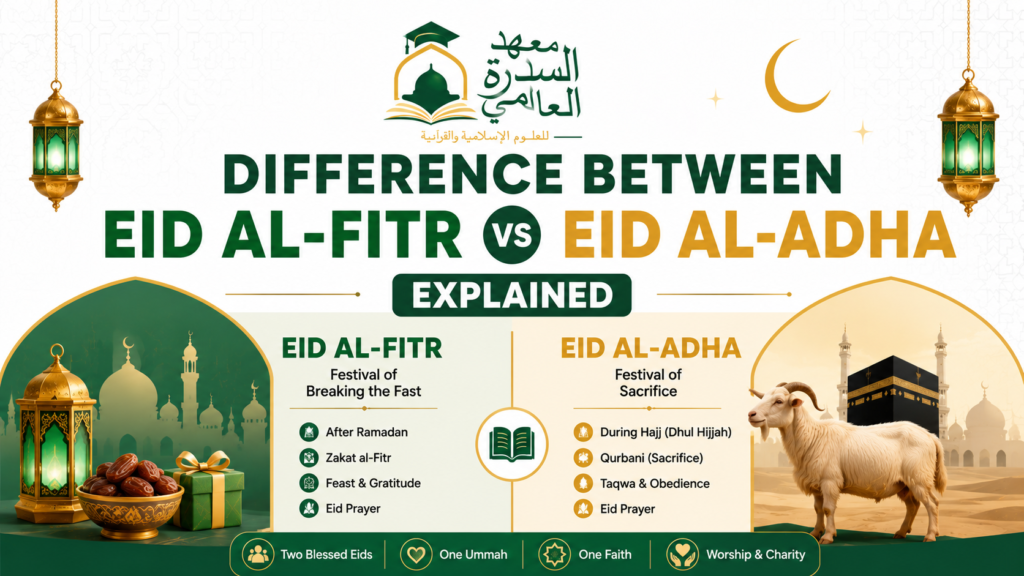
Eid al-Fitr and Eid al-Adha are the two major Islamic festivals celebrated by Muslims around the world. Although both are occasions of prayer, gratitude, charity, and family gatherings, they commemorate different acts of worship and carry distinct spiritual messages.
Eid al-Fitr marks the completion of the month of Ramadan, while Eid al-Adha takes place during the month of Dhul Hijjah and is closely connected to the Hajj pilgrimage and the sacrifice of Prophet Ibrahim (AS).
Understanding the difference between these two Eids helps Muslims appreciate the unique purpose of each celebration and the lessons they teach about faith, devotion, generosity, and obedience to Allah.
Quick Answer
Beginner Friendly
The main difference between Eid al-Fitr and Eid al-Adha is their purpose.
- Eid al-Fitr celebrates the end of Ramadan and emphasizes gratitude, fasting, and Zakat al-Fitr.
- Eid al-Adha commemorates Prophet Ibrahim (AS)’s obedience to Allah and is associated with Hajj and Qurbani.
Both Eids include congregational prayer, remembrance of Allah, charity, and community celebrations, but they occur at different times of the Islamic calendar and are connected to different acts of worship.
Featured Snippet Answer
Eid al-Fitr celebrates the completion of Ramadan and focuses on gratitude and charity, while Eid al-Adha commemorates Prophet Ibrahim’s (AS) willingness to sacrifice in obedience to Allah and is associated with Hajj and Qurbani. Both are major Islamic festivals that include Eid prayer, remembrance of Allah, and acts of generosity.
Eid al-Fitr vs Eid al-Adha Comparison Table
| Feature | Eid al-Fitr | Eid al-Adha |
| Timing | 1st of Shawwal | 10th of Dhul Hijjah |
| Purpose | Celebrate the end of Ramadan | Commemorate sacrifice and obedience |
| Associated Worship | Fasting and gratitude | Hajj and Qurbani |
| Charity | Zakat al-Fitr | Distribution of Qurbani meat |
| Animal Sacrifice | No | Yes |
| Connection | Ramadan | Hajj pilgrimage |
| Spiritual Theme | Gratitude and self-discipline | Obedience and sacrifice |
What Does “Eid” Mean?
The Arabic word Eid (عيد) means a recurring festival or celebration. In Islam, Eid is not merely a cultural holiday; it is a time of worship, remembrance of Allah, charity, and strengthening family and community bonds.
Muslims celebrate two annual Eids:
- Eid al-Fitr
- Eid al-Adha
These are the only two annual festivals established in Islamic teachings.
What Is Eid al-Fitr?
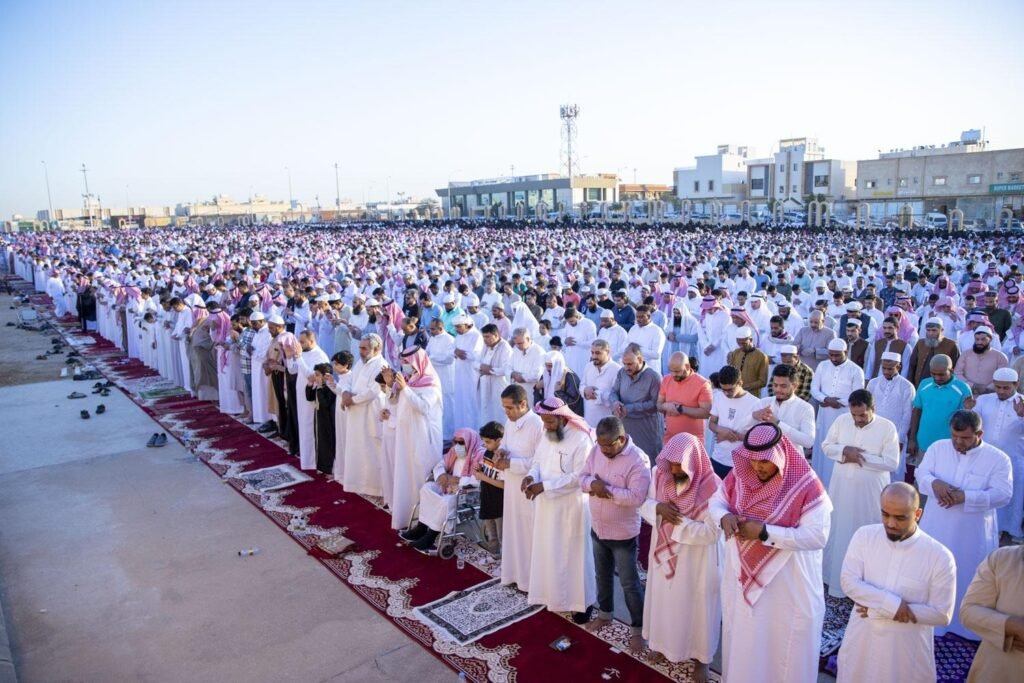
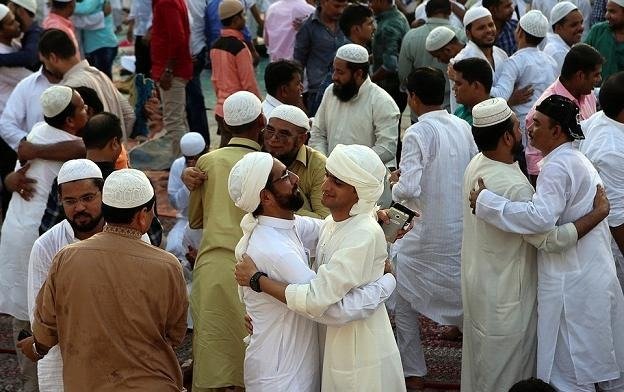

Eid al-Fitr is celebrated on the first day of Shawwal, immediately after the month of Ramadan.
Meaning
Eid al-Fitr
Festival of Breaking the Fast
Why Is It Celebrated?
It marks the completion of a month of fasting, prayer, Quran recitation, and spiritual reflection. Muslims thank Allah for the strength and guidance received during Ramadan.
Key Practices of Eid al-Fitr
- Giving Zakat al-Fitr before the Eid prayer.
- Performing the Eid prayer (Eid salah).
- Reciting Takbeer.
- Wearing clean or new clothes.
- Eating before going to the prayer.
- Visiting relatives and friends.
- Sharing joy with the community.
Quranic Connection
Allah says regarding Ramadan:
“…that you complete the prescribed period and glorify Allah for what He has guided you to, and perhaps you will be grateful.”
(Surah Al-Baqarah 2:185)
This verse highlights the themes of completion, glorification of Allah, and gratitude that are reflected in Eid al-Fitr.
Key Takeaway
Eid al-Fitr is a celebration of gratitude after a month of fasting and worship.
What Is Eid al-Adha?
6
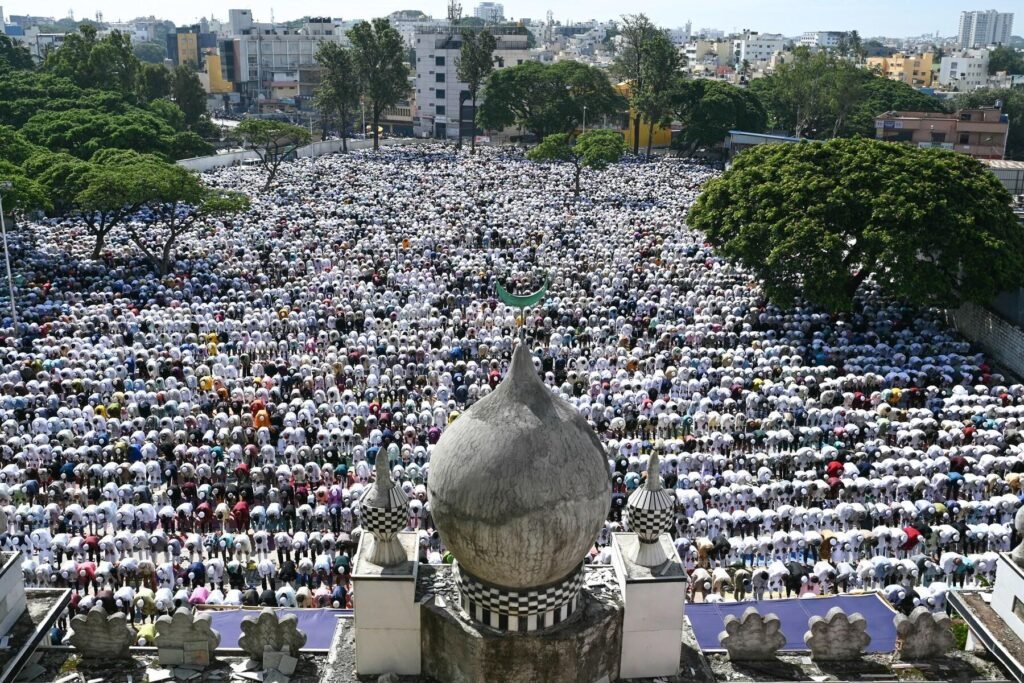
Eid al-Adha is observed on the 10th day of Dhul Hijjah, the final month of the Islamic lunar calendar.
Meaning
Eid al-Adha
Festival of Sacrifice
Why Is It Celebrated?
It commemorates the devotion of Prophet Ibrahim (AS) and Prophet Ismail (AS). Allah tested Ibrahim (AS) by commanding him to sacrifice his son, and when he demonstrated complete obedience, Allah replaced the sacrifice with a ram.
This event is described in Surah As-Saffat (37:99–111).
Key Practices of Eid al-Adha
- Performing the Eid prayer.
- Reciting Takbeer.
- Offering Qurbani (Udhiyah).
- Distributing meat to family, friends, and those in need.
- Remembering Allah during the Days of Tashreeq.
- Strengthening community ties.
Connection with Hajj
Eid al-Adha occurs during the same period that millions of Muslims perform Hajj in Makkah.
Important Hajj locations associated with this season include:
- Kaaba
- Mina
- Arafah
Quranic Connection
Allah says:
“So pray to your Lord and sacrifice [to Him alone].”
(Surah Al-Kawthar 108:2)
This verse connects prayer and sacrifice, two central aspects of Eid al-Adha.
Key Takeaway
Eid al-Adha emphasizes obedience to Allah, sacrifice, generosity, and remembrance of the legacy of Prophet Ibrahim (AS).
Major Differences Between Eid al-Fitr and Eid al-Adha
Although both Eids are joyful occasions of worship and community, they commemorate different acts of devotion. Understanding these distinctions helps Muslims appreciate the unique purpose of each festival.
1. Timing
The most obvious difference is when each Eid is celebrated.
- Eid al-Fitr is observed on the 1st of Shawwal, immediately after the month of Ramadan.
- Eid al-Adha is observed on the 10th of Dhul Hijjah, during the Hajj season.
Since the Islamic calendar follows the lunar cycle, the dates of both Eids move approximately 10–11 days earlier each year in the Gregorian calendar.
Key takeaway: The two Eids occur at different times because each is connected to a different act of worship.
2. Purpose
Each Eid celebrates a different aspect of faith.
Eid al-Fitr
Its purpose is to thank Allah for enabling Muslims to complete Ramadan—a month of fasting, prayer, Quran recitation, and self-discipline.
Eid al-Adha
Its purpose is to remember the obedience and trust shown by Prophet Ibrahim (AS), who was willing to carry out Allah’s command. It also coincides with the annual pilgrimage of Hajj.
Key takeaway: One Eid celebrates completing an act of worship, while the other commemorates devotion, sacrifice, and obedience.
3. Associated Acts of Worship
Every Eid is linked to a major pillar or important act of worship.
Eid al-Fitr
- Completion of Ramadan
- Zakat al-Fitr
- Eid prayer
- Takbeer
- Gratitude and remembrance of Allah
Eid al-Adha
- Hajj (for those performing it)
- Eid prayer
- Qurbani (Udhiyah) for eligible Muslims
- Takbeer
- Increased remembrance of Allah during the Days of Tashreeq
Key takeaway: The surrounding acts of worship differ, even though both Eids begin with congregational prayer.
4. Charity
Charity is encouraged throughout Islam, but its form differs between the two Eids.
On Eid al-Fitr
Muslims give Zakat al-Fitr before the Eid prayer. Its purpose is to help those in need celebrate Eid and to purify the fasting person’s shortcomings during Ramadan.
On Eid al-Adha
Those offering Qurbani are encouraged to share the meat with family, friends, and people in need, strengthening generosity and community support.
Key takeaway: Both Eids encourage giving, but they do so in different ways.
5. Sacrifice
This is one of the clearest distinctions.
- Eid al-Fitr: No animal sacrifice is associated with the festival.
- Eid al-Adha: Eligible Muslims may offer Qurbani, following the example of Prophet Ibrahim (AS).
It is important to understand that the purpose of Qurbani is not simply the sacrifice itself but the sincerity and obedience behind it.
The Quran reminds believers:
“Their meat will not reach Allah, nor will their blood, but what reaches Him is your piety.”
(Surah Al-Hajj 22:37)
Key takeaway: The emphasis of Qurbani is devotion to Allah, not the act of sacrifice alone.
6. Spiritual Theme
Each Eid highlights different spiritual qualities.
| Eid al-Fitr | Eid al-Adha |
| Gratitude | Obedience |
| Self-discipline | Sacrifice |
| Mercy | Trust in Allah |
| Spiritual renewal | Complete submission |
| Celebration after fasting | Celebration through devotion |
These themes complement one another and reflect the balance of Islamic teachings.
Similarities Between Eid al-Fitr and Eid al-Adha
Despite their differences, the two Eids share many important characteristics.
Both Are Acts of Worship
Eid is more than a celebration. Muslims begin both occasions by remembering Allah and performing the Eid prayer.
Both Include Eid Prayer
On both Eids, Muslims gather in congregation to perform the special Eid prayer and listen to the khutbah (sermon).
Both Encourage Charity
Helping others is a central part of both festivals.
Whether through Zakat al-Fitr or sharing Qurbani meat, Muslims are encouraged to ensure that others can also experience the joy of Eid.
Both Strengthen Family and Community
During both Eids, Muslims commonly:
- Visit relatives.
- Meet friends and neighbors.
- Exchange greetings.
- Share meals.
- Reconcile differences.
- Spend time with family.
These gatherings strengthen relationships and foster unity within the Muslim community.
Both Include Takbeer
Remembering Allah through Takbeer is a Sunnah during both Eids, although the timings and specific practices differ.
Similarities at a Glance
- Both are Islamic festivals.
- Both begin with Eid prayer.
- Both encourage remembrance of Allah.
- Both promote generosity.
- Both strengthen community bonds.
- Both are established through the Sunnah of the Prophet ﷺ.
Key takeaway: While the occasions differ in purpose, both Eids remind Muslims to worship Allah and care for others.
Why Are There Two Eids in Islam?
A common question is:
Why didn’t Islam establish only one annual festival?
The two Eids commemorate different forms of worship and teach different spiritual lessons.
- Eid al-Fitr follows a month of personal worship through fasting and self-discipline.
- Eid al-Adha highlights obedience, sacrifice, and generosity while coinciding with Hajj.
Together, they remind Muslims that worship takes many forms. Sometimes it involves patience and restraint,
Spiritual Lessons from Eid al-Fitr and Eid al-Adha
Although both Eids are joyful occasions, they are also opportunities to strengthen faith and reflect on important Islamic values.
Lessons from Eid al-Fitr
1. Gratitude to Allah
After completing Ramadan, Muslims thank Allah for giving them the ability to fast, worship, and seek His forgiveness.
Eid reminds believers that every act of worship is a blessing from Allah.
2. Self-Discipline
Ramadan teaches Muslims to control their desires, be patient, and remain mindful of Allah.
Eid al-Fitr celebrates completing this month of spiritual training, encouraging believers to carry those good habits throughout the year.
3. Compassion for Others
By giving Zakat al-Fitr before the Eid prayer, Muslims help ensure that those in need can also enjoy the day of Eid.
This reinforces the Islamic values of generosity and social responsibility.
Lessons from Eid al-Adha
1. Complete Obedience to Allah
The story of Prophet Ibrahim (AS) teaches Muslims to place their trust in Allah, even when faced with difficult tests.
His willingness to obey Allah remains one of the greatest examples of faith in Islamic history.
2. Sacrifice with Sincerity
Qurbani is not only about offering an animal. It reminds Muslims to sacrifice their time, wealth, and personal desires for the sake of Allah.
As the Quran teaches:
“Their meat will not reach Allah, nor will their blood, but what reaches Him is your piety.”
(Surah Al-Hajj 22:37)
The true purpose of sacrifice is sincerity and devotion.
3. Generosity and Sharing
One of the beautiful traditions of Eid al-Adha is sharing Qurbani meat with relatives, neighbors, and those in need.
This strengthens compassion, unity, and care within the Muslim community.
Key Takeaway
Eid al-Fitr teaches gratitude and self-discipline, while Eid al-Adha teaches obedience, sacrifice, and generosity. Together, they remind Muslims that worship includes both personal devotion and service to others.
Common Misconceptions
Misconception 1: One Eid Is More Important Than the Other
Both Eid al-Fitr and Eid al-Adha are significant Islamic festivals established through the Sunnah. Each has its own purpose and spiritual significance.
Misconception 2: Qurbani Is Performed on Both Eids
No. Qurbani (Udhiyah) is associated only with Eid al-Adha.
Misconception 3: Eid al-Fitr Is Only About Food and Celebrations
While families enjoy meals and celebrations, the day begins with worship, gratitude, charity, and remembrance of Allah.
Misconception 4: Only Pilgrims Celebrate Eid al-Adha
Although Eid al-Adha coincides with Hajj, Muslims around the world celebrate it, whether or not they are performing the pilgrimage.
Misconception 5: The Eid Prayer Is Optional Entertainment
The Eid prayer is an important act of worship and one of the distinguishing features of both Eids.
Frequently Asked Questions (FAQs)
1. What is the main difference between Eid al-Fitr and Eid al-Adha?
Eid al-Fitr marks the end of Ramadan and celebrates gratitude after fasting. Eid al-Adha commemorates Prophet Ibrahim’s (AS) obedience to Allah and is associated with Hajj and Qurbani.
2. Why are there two Eids in Islam?
The two Eids commemorate different acts of worship. Eid al-Fitr follows Ramadan, while Eid al-Adha is connected to Hajj and the story of Prophet Ibrahim (AS).
3. Which Eid comes first?
Eid al-Fitr comes first because it is celebrated on the 1st of Shawwal, immediately after Ramadan. Eid al-Adha is observed later on the 10th of Dhul Hijjah.
4. Why is Eid al-Adha called the Festival of Sacrifice?
It commemorates Prophet Ibrahim’s (AS) willingness to sacrifice his son in obedience to Allah. Allah replaced the sacrifice with a ram, and Muslims remember this event through Qurbani.
5. Why is Eid al-Fitr celebrated after Ramadan?
It celebrates the completion of a month of fasting, worship, Quran recitation, and spiritual growth.
6. Is Eid al-Adha more important than Eid al-Fitr?
Both Eids are important in Islam and serve different purposes. Rather than comparing their importance, Muslims are encouraged to observe both with sincerity and gratitude.
7. What is Qurbani?
Qurbani (Udhiyah) is the sacrifice of a permitted animal during Eid al-Adha by eligible Muslims, following the example of Prophet Ibrahim (AS). It is an act of worship performed to seek Allah’s pleasure.
8. What is Zakat al-Fitr?
Zakat al-Fitr is a charitable obligation given before the Eid al-Fitr prayer so that people in need can also participate in the celebration.
9. Do Muslims pray differently on Eid al-Fitr and Eid al-Adha?
The basic format of the Eid prayer is similar on both occasions, although there are some differences in recommended practices and the timing of the additional Takbeer according to various authentic scholarly opinions.
10. How long do Eid celebrations last?
The main celebration begins on the day of Eid. Eid al-Adha is followed by the Days of Tashreeq (11th–13th of Dhul Hijjah), during which remembrance of Allah continues. Cultural celebrations may vary from one country to another.
Conclusion
Eid al-Fitr and Eid al-Adha are the two annual Islamic festivals that celebrate different aspects of faith and worship.
Eid al-Fitr comes after Ramadan and reminds Muslims to be grateful for the opportunity to fast, pray, and grow spiritually. It emphasizes gratitude, charity through Zakat al-Fitr, and the joy of completing a month of devotion.
Eid al-Adha takes place during Dhul Hijjah and commemorates the unwavering obedience of Prophet Ibrahim (AS). Through the practice of Qurbani, Muslims remember that true devotion is measured by sincerity, sacrifice, and trust in Allah.
Although their purposes differ, both Eids strengthen faith, encourage generosity, unite families and communities, and remind Muslims to remember Allah in every aspect of life.
By understanding the meaning and significance of both celebrations, Muslims can observe each Eid with greater appreciation, knowledge, and devotion.
Key Takeaways
- Eid al-Fitr marks the end of Ramadan and celebrates gratitude after fasting.
- Eid al-Adha commemorates Prophet Ibrahim’s (AS) obedience to Allah and is linked to Hajj and Qurbani.
- Both Eids begin with the Eid prayer and encourage remembrance of Allah.
- Charity is an essential part of both celebrations, though it is practiced differently.
- Eid al-Fitr emphasizes gratitude and spiritual renewal, while Eid al-Adha highlights sacrifice, obedience, and generosity.
- Together, the two Eids reflect the balance of Islamic worship, combining personal devotion with compassion for others.
Continue Your Quran Islamic Learning
To strengthen your understanding of Salah and Quran recitation, you may also find these topics helpful:
Related Articles
- Sunnahs of Eid al-Adha: Complete Authentic Guide (2026)
- What Is the Connection Between Hajj and Eid al-Adha?
- Can You Chew Gum While Fasting? Islamic Ruling Explained
- When Can You Eat During Ramadan? Complete Guide
- Is Qurbani Mandatory or Sunnah? Complete Islamic Ruling Guide
Recommended Courses
By combining authentic knowledge with regular practice, you can continue building a stronger connection with Allah and perform your daily prayers with confidence, understanding, and devotion.