
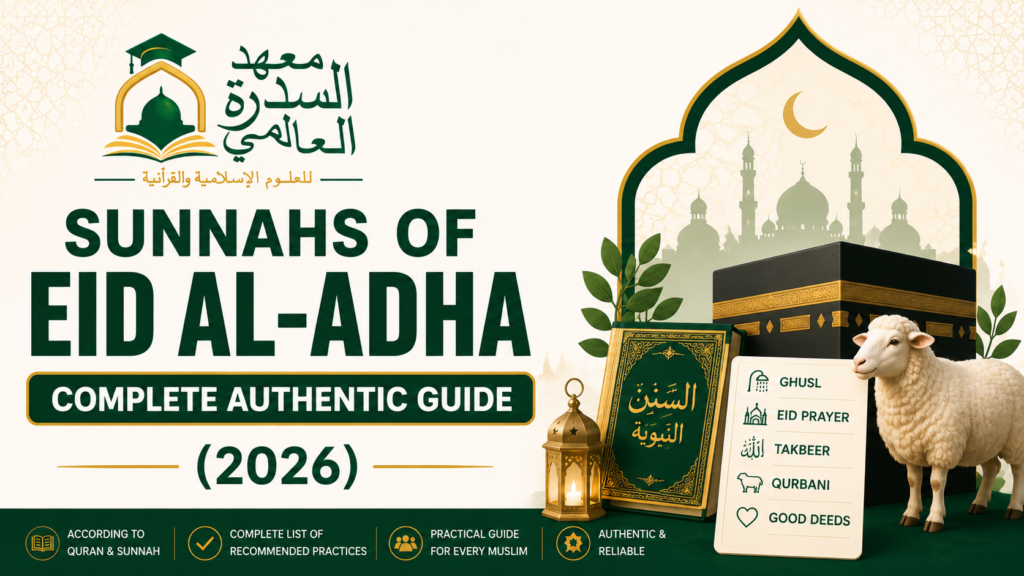
Eid al-Adha is one of the greatest celebrations in Islam. It is a day of worship, gratitude, sacrifice, and remembrance of Allah. While many Muslims know about the Eid prayer and Qurbani, not everyone is familiar with the beautiful Sunnahs that the Prophet Muhammad ﷺ practiced on this blessed day.
Following these Sunnahs helps us celebrate Eid in a way that is pleasing to Allah while strengthening our connection with the teachings of the Prophet ﷺ. These practices are simple, meaningful, and suitable for Muslims of all ages.
In this complete guide, you’ll learn the authentic Sunnahs of Eid al-Adha, what to do before, during, and after the Eid prayer, the Sunnah of Qurbani, common mistakes to avoid, and practical tips for making your Eid more spiritually rewarding.
Quick Answer: What Are the Sunnahs of Eid al-Adha?
The Sunnahs of Eid al-Adha include remembering Allah through the Takbeer during the days of Dhul Hijjah, performing Ghusl before the Eid prayer, wearing your best clean and modest clothes, applying perfume (for men), attending the Eid prayer, listening to the Khutbah, offering the Qurbani after the prayer, eating from the sacrifice afterward, remembering Allah throughout the day, and sharing the joy of Eid with family, neighbors, and those in need.
These practices follow the example of Prophet Muhammad ﷺ and remind Muslims that Eid is not only a celebration but also a day of worship, gratitude, generosity, and obedience to Allah.
Featured Snippet
The Sunnahs of Eid al-Adha include performing Ghusl before the Eid prayer, wearing your best modest clothing, reciting the Takbeer, attending the Eid prayer, listening to the Khutbah, offering the Qurbani after the prayer, eating from the sacrifice, remembering Allah through Dhikr, and sharing food and happiness with family and those in need. These recommended acts follow the example of Prophet Muhammad ﷺ.
What Is Eid al-Adha?
Eid al-Adha, also known as the Festival of Sacrifice, is celebrated on the 10th of Dhul Hijjah, the final month of the Islamic calendar. It commemorates the remarkable obedience of Prophet Ibrahim (AS), who was willing to sacrifice his beloved son in submission to Allah’s command. Before the sacrifice took place, Allah replaced his son with a ram, demonstrating that sincere faith and obedience are what Allah values.
This blessed occasion also marks the completion of the major rituals of Hajj. Around the world, Muslims gather for the Eid prayer, offer Qurbani if they are able, remember Allah abundantly, and strengthen family and community ties through generosity and kindness.
Eid al-Adha is not simply a cultural celebration—it is an opportunity to increase worship, express gratitude, and revive the Sunnah of the Prophet Muhammad ﷺ.
What Does “Sunnah” Mean?
A Sunnah is anything authentically taught, practiced, approved, or encouraged by Prophet Muhammad ﷺ. Muslims follow the Sunnah because Allah commands believers to obey His Messenger and take him as the best example.
Some Sunnahs are strongly emphasized and practiced regularly, while others are recommended acts that bring additional reward. Observing these Sunnahs allows Muslims to worship Allah more completely and preserve the beautiful traditions of Islam.
On Eid al-Adha, following the Sunnah transforms the day from a festive occasion into an act of devotion and remembrance of Allah.
Sunnah, Fard, and Wajib: What’s the Difference?
Understanding these terms helps Muslims distinguish between what is required and what is recommended.
| Term | Meaning | Leaving It |
| Fard | Obligatory act established by clear evidence | Sinful without a valid excuse |
| Wajib | Required act according to some schools of Islamic jurisprudence | Serious matter that should not be neglected |
| Sunnah | Recommended practice of the Prophet ﷺ | No sin for leaving it, but reward for following it |
Many acts associated with Eid al-Adha—such as performing Ghusl, wearing nice clothes, and taking a different route after the prayer—are Sunnahs that beautify a Muslim’s worship.
Preparing for Eid al-Adha: Sunnahs Before Leaving for the Eid Prayer
Preparing for Eid begins long before arriving at the prayer ground. The Prophet ﷺ encouraged Muslims to approach this blessed day with cleanliness, gratitude, and remembrance of Allah.
The following Sunnahs help prepare both the body and the heart for Eid.
1. Increase the Takbeer During the Days of Dhul Hijjah
One of the greatest acts of worship during the days leading to Eid al-Adha is frequently remembering Allah through the Takbeer.
Muslims glorify Allah by saying:
Allahu Akbar, Allahu Akbar, La ilaha illa Allah. Allahu Akbar, Allahu Akbar wa lillahil-hamd.
The Takbeer reminds believers that Allah is greater than every worldly concern. It fills homes, mosques, marketplaces, and hearts with remembrance of Allah during these blessed days.
Many scholars encourage Muslims to recite the Takbeer often throughout the first ten days of Dhul Hijjah and especially during the Days of Tashreeq after the obligatory prayers, according to the established practice in their community.
Practical Tip
Make the Takbeer part of your daily routine by reciting it:
- After every obligatory prayer (where practiced according to scholarly guidance)
- While walking to the mosque
- During household activities
- While traveling
- Before leaving for the Eid prayer
The goal is not merely repeating words but remembering Allah sincerely.
2. Perform Ghusl Before the Eid Prayer
Cleanliness is an important part of Islam, and preparing oneself physically reflects respect for the importance of Eid.
Many scholars mention that performing Ghusl before attending the Eid prayer is from the Sunnah based on reports from the early generations of Muslims.
Taking a complete bath before leaving for Eid helps Muslims appear clean, presentable, and ready to gather with the community in worship.
Practical Tip
If possible:
- Wake up early.
- Perform Ghusl.
- Brush your teeth or use Miswak.
- Trim nails if needed before Eid.
- Wear clean socks and shoes.
- Prepare calmly instead of rushing.
Beginning the day in a state of cleanliness creates a peaceful and joyful mindset.
3. Wear Your Best Clean and Modest Clothes
Islam encourages Muslims to appear neat and dignified on special occasions.
The Prophet ﷺ would wear his finest clothing for Eid while maintaining modesty and humility.
This does not mean buying expensive outfits every year. Instead, Muslims should wear the best clean clothing they already own.
For men, this may include a clean thawb, kurta, or other modest attire.
For women, Islamic guidelines of modest dress remain the same on Eid as on any other day.
Children can also participate by wearing clean and cheerful clothing that makes the day feel special.
Remember
The purpose of dressing well is to honor the occasion, not to compete with others or seek admiration.
Eid is a celebration of gratitude—not extravagance.
4. Apply Perfume Before Going to the Eid Prayer (For Men)
Another beautiful Sunnah is applying a pleasant fragrance before leaving for the Eid prayer.
Islam encourages cleanliness and good personal hygiene, especially when Muslims gather together.
Men may wear a lawful fragrance before attending the Eid congregation.
Women should continue to observe Islamic guidelines regarding perfume when going out in public.
Practical Tip
Choose a light, pleasant fragrance rather than an overpowering scent.
Good manners include ensuring that your cleanliness and fragrance are comfortable for those around you.
5. Delay Eating Until After the Eid Prayer (When Offering Qurbani)
One of the distinguishing Sunnahs of Eid al-Adha is delaying eating until after returning from the Eid prayer, particularly for those who intend to offer the sacrifice. It is recommended to eat from one’s Qurbani after it has been offered.
This differs from Eid al-Fitr, when it is Sunnah to eat before leaving for the prayer.
This distinction reminds Muslims of the unique purpose of each Eid:
- Eid al-Fitr marks the completion of fasting in Ramadan.
- Eid al-Adha centers on sacrifice, obedience, and gratitude to Allah.
For those who are not offering a sacrifice, scholars have discussed the practice differently, but delaying eating remains a widely recommended Sunnah for the person performing Qurbani.
Why These Sunnahs Matter
The Sunnahs before the Eid prayer prepare a Muslim both physically and spiritually. Cleanliness, modest dress, remembrance of Allah, and sincere intention help transform the morning of Eid into an act of worship rather than merely a festive routine.
By following these simple practices, Muslims revive the example of the Prophet ﷺ and begin the day with gratitude, discipline, and devotion.
Sunnahs During and After the Eid Prayer
After preparing for Eid at home, the next stage is attending the Eid prayer with sincerity and humility. The Prophet Muhammad ﷺ taught several beautiful Sunnahs that help Muslims make the most of this blessed gathering. These practices emphasize worship, unity, gratitude, and remembrance of Allah.
6. Attend the Eid Prayer Early and With a Positive Intention
The Eid prayer is one of the greatest symbols of Islam. Muslims gather in large numbers to worship Allah, thank Him for His blessings, and celebrate together as one community.
It is recommended to leave for the prayer in good time so you can arrive calmly, join the Takbeer, and avoid rushing or disturbing others.
Before leaving home, renew your intention. You are not attending merely because it is a community tradition—you are going to worship Allah and follow the Sunnah of the Prophet ﷺ.
Practical Tips
- Wake up early and avoid last-minute preparation.
- Reach the prayer area before the congregation begins.
- Keep your phone on silent.
- Spend the waiting time remembering Allah instead of engaging in unnecessary conversation.
- Help children understand the importance of the occasion while encouraging good manners.
7. Walk to the Eid Prayer When It Is Practical
Among the reported practices of the Prophet ﷺ is walking to the place of Eid prayer when possible. Walking provides an opportunity to remember Allah, meet fellow Muslims, and appreciate the joy of the day.
However, Islam is a religion of ease. If the prayer location is far away, weather conditions are difficult, or health or safety is a concern, traveling by car or other transportation is perfectly acceptable.
Wisdom Behind This Sunnah
Walking to the prayer:
- Increases opportunities for Dhikr.
- Strengthens community ties.
- Allows Muslims to greet one another.
- Encourages humility and gratitude.
The objective is not hardship but following the Sunnah whenever reasonably possible.
8. Continue Reciting the Takbeer Until the Eid Prayer Begins
One of the most beautiful features of Eid al-Adha is hearing the Takbeer echoed throughout homes, streets, mosques, and prayer grounds.
While waiting for the Eid prayer to begin, continue remembering Allah by reciting the Takbeer with sincerity.
This creates an atmosphere filled with gratitude and reminds every believer that Allah is greater than all worldly concerns.
Avoid replacing this valuable time with idle conversation, excessive phone use, or distractions that diminish the spiritual atmosphere.
9. Perform the Eid Prayer With Humility and Attention
The Eid prayer is an important act of worship and should be approached with concentration and respect.
Listen carefully to the Imam, follow the congregation correctly, and avoid unnecessary movement or conversation during the prayer.
For those attending Eid for the first time or new Muslims, there is no need to feel anxious. Simply follow the Imam and participate as best as you can.
Remember that Eid prayer is a celebration of worship before it is a celebration of festivity.
10. Listen to the Eid Khutbah
After the Eid prayer, the Imam delivers the Khutbah (sermon), offering reminders about faith, gratitude, obedience, and community responsibilities.
Although many people begin leaving immediately after the prayer, listening attentively to the Khutbah reflects respect for the gathering and allows Muslims to benefit from valuable reminders.
The Khutbah often includes:
- Lessons from the story of Prophet Ibrahim (AS).
- The importance of sincerity.
- Guidance about Qurbani.
- Advice on maintaining family ties.
- Encouragement to remember Allah throughout the days of Dhul Hijjah.
Practical Tip
Remain seated quietly, listen carefully, and encourage children to do the same. This helps cultivate respect for Islamic learning and communal worship.
11. Return Home by a Different Route (When Practical)
It is authentically reported that the Prophet ﷺ would return from the Eid prayer using a different route from the one he took to reach the prayer ground.
Scholars have mentioned several possible wisdoms behind this practice, including:
- Meeting more members of the Muslim community.
- Spreading greetings of peace.
- Increasing opportunities for remembrance of Allah.
- Demonstrating the public symbols of Islam.
If circumstances make this difficult—such as traffic patterns, safety concerns, or transportation arrangements—there is no hardship. The Sunnah should be followed when reasonably practical.
Sunnahs After the Eid Prayer
The worship of Eid does not end when the prayer finishes. In many ways, the remainder of the day provides even greater opportunities to earn reward through gratitude, generosity, and kindness.
12. Offer the Qurbani After the Eid Prayer
One of the defining acts of Eid al-Adha is the sacrifice (Qurbani or Udhiyah).
The Sunnah is that the sacrifice should be offered after the Eid prayer has been completed. Performing it before the Eid prayer does not fulfill the Sunnah of Udhiyah for Eid.
Qurbani commemorates the willingness of Prophet Ibrahim (AS) to obey Allah’s command without hesitation.
It reminds every Muslim that true devotion means placing Allah’s pleasure above personal desires.
The Spiritual Lessons of Qurbani
Qurbani teaches:
- Obedience to Allah.
- Gratitude for His blessings.
- Generosity toward others.
- Compassion for the needy.
- Sacrifice of one’s wealth for Allah’s sake.
The animal itself is not what reaches Allah. Rather, it is the sincerity and God-consciousness (taqwa) behind the act that matter.
13. Eat From Your Qurbani
For those offering a sacrifice, it is recommended to eat from the meat of their own Qurbani.
This practice reflects gratitude for Allah’s provision and allows the believer to personally participate in this act of worship.
Many Muslims prepare a simple meal from the sacrificed animal after returning from the Eid prayer.
Sharing that meal with family creates lasting memories centered on worship and thankfulness rather than extravagance.
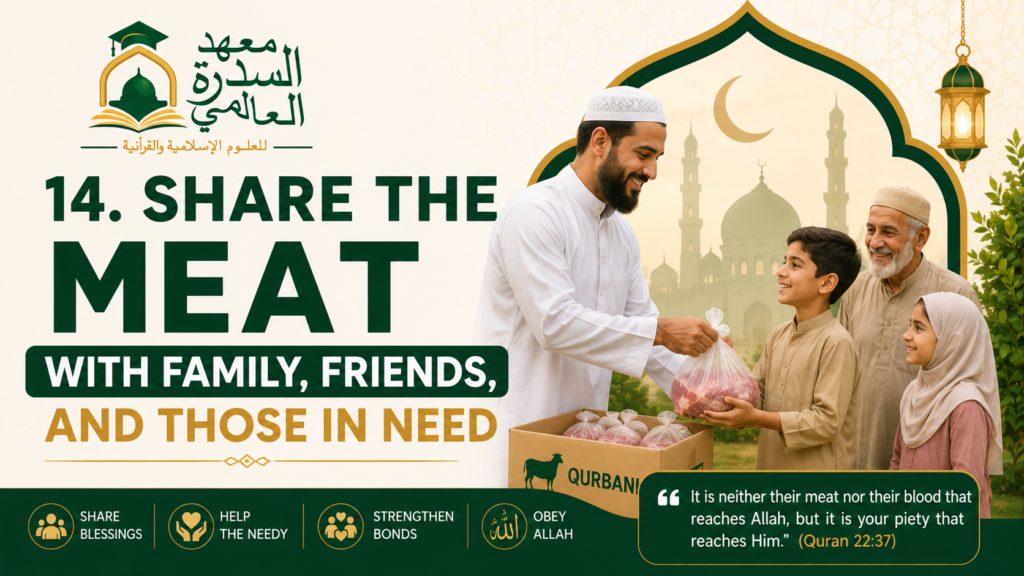
14. Share the Meat With Family, Friends, and Those in Need
Generosity is one of the defining characteristics of Eid al-Adha.
The sacrifice is not only for personal benefit but also an opportunity to care for others.
Many scholars recommend distributing the meat among:
- Your household.
- Relatives.
- Friends and neighbors.
- Poor and needy families.
This strengthens family relationships, promotes social harmony, and ensures that everyone can participate in the joy of Eid.
For many families around the world, the meat received during Eid may be one of the few occasions in the year when they enjoy such nourishment.
Helping them is both an act of kindness and an expression of gratitude to Allah.
15. Continue Remembering Allah Throughout the Day
Although Eid is a joyful occasion, Muslims should not allow celebration to distract them from remembering Allah.
Continue engaging in:
- Dhikr.
- Takbeer.
- Du’a.
- Gratitude.
- Praising Allah for His countless blessings.
The happiness of Eid becomes more meaningful when it is connected to worship rather than only food, gifts, or entertainment.
16. Exchange Lawful Eid Greetings
Greeting fellow Muslims with kind words strengthens love and brotherhood within the community.
Common greetings include:
- Eid Mubarak
- Taqabbal Allahu minna wa minkum
(“May Allah accept from us and from you.”)
A sincere smile, warm greeting, and kind words are all simple acts that spread happiness and reinforce the bonds of faith.
17. Strengthen Family Ties
Eid is an excellent opportunity to repair relationships, forgive past misunderstandings, and reconnect with relatives.
Consider:
- Visiting parents.
- Calling relatives who live far away.
- Spending quality time with your children.
- Honoring grandparents.
- Visiting those who are elderly or ill, when appropriate.
- Including converts, widows, or people who may otherwise feel alone.
These acts reflect the broader Islamic values of mercy, compassion, and maintaining family ties.
18. Include Women and Children in the Joy of Eid
The Prophet ﷺ encouraged the Muslim community to participate in the Eid gathering, including women and children, while observing Islamic guidelines.
Parents can make Eid meaningful for children by:
- Explaining the story of Prophet Ibrahim (AS).
- Teaching the purpose of Qurbani.
- Encouraging gratitude instead of materialism.
- Helping them participate in charitable acts.
- Creating joyful memories rooted in faith.
When children associate Eid with worship, generosity, and family, they develop a lifelong appreciation for Islamic values.
Key Lessons From the Sunnahs of Eid al-Adha
The Sunnahs of Eid al-Adha are more than individual actions—they form a complete model for celebrating this blessed day.
By following these practices, Muslims learn to:
- Put worship before celebration.
- Remember Allah frequently.
- Honor the legacy of Prophet Ibrahim (AS).
- Follow the example of Prophet Muhammad ﷺ.
- Strengthen family and community bonds.
- Care for those in need.
- Express gratitude through both words and actions.
Every Sunnah, even one as simple as wearing clean clothes or greeting another Muslim with kindness, contributes to making Eid a day filled with faith, mercy, and remembrance of Allah.
Complete Eid al-Adha Sunnah Checklist
Use this checklist to help you follow the Sunnahs of Eid al-Adha in a practical and organized way.
| Time | Recommended Sunnah | Status |
| Before Fajr | Make a sincere intention to worship Allah | ☐ |
| Morning | Perform Ghusl | ☐ |
| Morning | Brush your teeth or use Miswak | ☐ |
| Morning | Wear your best clean and modest clothes | ☐ |
| Morning | Apply perfume (for men) | ☐ |
| Before leaving | Recite the Takbeer | ☐ |
| Going to prayer | Walk to the Eid prayer if practical | ☐ |
| Eid prayer | Participate with humility and focus | ☐ |
| After prayer | Listen attentively to the Khutbah | ☐ |
| After prayer | Return by a different route if practical | ☐ |
| After prayer | Offer the Qurbani (if required or intended) | ☐ |
| After sacrifice | Eat from your Qurbani | ☐ |
| Throughout the day | Continue Dhikr and gratitude | ☐ |
| Throughout the day | Visit relatives and strengthen family ties | ☐ |
| Throughout the day | Share meat with relatives, neighbors, and those in need | ☐ |
| Throughout the day | Exchange Islamic greetings | ☐ |
Eid al-Adha Timeline: Before, During, and After the Eid Prayer
| Before the Eid Prayer | During the Eid Prayer | After the Eid Prayer |
| Perform Ghusl | Recite the Takbeer until the prayer begins | Offer Qurbani |
| Wear clean clothes | Pray with concentration | Eat from the sacrifice |
| Apply perfume (men) | Listen to the Khutbah | Share meat with others |
| Delay eating if offering Qurbani | Worship with the congregation | Continue Dhikr |
| Leave early | Maintain good manners | Visit family and friends |
This timeline provides a simple way to remember the sequence of Sunnahs throughout the day.
Sunnah vs. Cultural Customs
Many Eid traditions are culturally beautiful, but it is important to distinguish them from practices established by the Sunnah.
| Authentic Sunnah | Cultural Practice |
| Performing Ghusl | Decorating homes (permissible cultural custom) |
| Wearing clean, modest clothes | Buying expensive designer outfits |
| Reciting the Takbeer | Excessive fireworks or noisy celebrations |
| Attending the Eid prayer | Competing over gifts or displays of wealth |
| Listening to the Khutbah | Leaving immediately after the prayer without a valid reason |
| Offering Qurbani correctly | Treating Qurbani as only a social event |
| Sharing meat with those in need | Keeping all the meat for oneself |
Islam allows many cultural traditions as long as they do not contradict Islamic teachings or replace acts of worship.
Common Mistakes to Avoid on Eid al-Adha
Even with good intentions, Muslims sometimes overlook important Sunnahs or confuse cultural habits with religious practices.
1. Forgetting the Takbeer
Many people become busy preparing food, visiting relatives, or traveling and forget to remember Allah frequently during these blessed days.
Better practice: Continue reciting the Takbeer and engaging in Dhikr throughout the day.
2. Performing Qurbani Before the Eid Prayer
The Sunnah is to offer the sacrifice after the Eid prayer.
If someone intends their sacrifice as the Eid Udhiyah, it should not be done before the prayer.
3. Skipping the Eid Khutbah Without a Reason
Although some people leave immediately after the prayer, remaining to listen to the Khutbah allows Muslims to benefit from valuable reminders and guidance.
4. Turning Eid Into Only a Social Celebration
Food, gifts, and family gatherings are part of the joy of Eid, but they should never overshadow worship.
A successful Eid combines happiness with gratitude, remembrance of Allah, and acts of kindness.
5. Forgetting the Poor and Needy
The spirit of Eid al-Adha includes generosity.
Remember to share your Qurbani and assist families who may not otherwise enjoy the blessings of the day.
6. Competing in Luxury and Extravagance
Islam encourages Muslims to look neat and presentable, but not to show pride or compete through wealth.
The best clothing is clean, modest, and worn with gratitude and humility.
Practical Tips for Families
Parents have an excellent opportunity to teach children the values behind Eid.
Consider these simple ideas:
- Explain the story of Prophet Ibrahim (AS) in an age-appropriate way.
- Teach children the Takbeer and its meaning.
- Involve them in distributing Qurbani meat.
- Encourage them to greet relatives politely.
- Visit grandparents or elderly family members together.
- Spend time reading or discussing the lessons of sacrifice and obedience.
- Help children understand that Eid is a day of worship before it is a day of gifts.
These experiences help children build a lasting connection with Islamic values.
Frequently Asked Questions (FAQs)
What are the Sunnahs of Eid al-Adha?
The Sunnahs include performing Ghusl, wearing clean and modest clothes, applying perfume for men, reciting the Takbeer, attending the Eid prayer, listening to the Khutbah, offering Qurbani after the prayer, eating from the sacrifice, remembering Allah, and sharing with family and those in need.
Is taking Ghusl Sunnah before the Eid prayer?
Yes. Performing Ghusl before attending the Eid prayer is a well-known Sunnah mentioned by many scholars based on reports from the early Muslim community.
Should Muslims eat before the Eid al-Adha prayer?
For those offering Qurbani, it is recommended to delay eating until after the Eid prayer and to eat from their sacrifice afterward. This differs from Eid al-Fitr, where eating before the prayer is Sunnah.
Is wearing perfume Sunnah on Eid?
Yes, men are encouraged to apply a pleasant fragrance before attending the Eid prayer. Women should continue to observe Islamic guidelines regarding perfume when leaving home.
Can women attend the Eid prayer?
Yes. Women were encouraged to attend the Eid gathering while observing Islamic guidelines of modesty. Even those not praying were encouraged to witness the blessings of the gathering, according to authentic narrations.
Why do Muslims recite the Takbeer during Eid al-Adha?
The Takbeer glorifies Allah and reminds believers that His greatness is above all worldly matters. It is one of the distinguishing acts of worship during the first ten days of Dhul Hijjah and the days of Eid.
Is listening to the Eid Khutbah important?
Yes. While the rulings differ from those of the Friday Khutbah, listening attentively allows Muslims to benefit from reminders about faith, gratitude, Qurbani, and community responsibilities.
What is the purpose of Qurbani?
Qurbani commemorates the obedience of Prophet Ibrahim (AS) and serves as an act of worship expressing gratitude, submission, and compassion. It also benefits families and those in need through the distribution of meat.
Key Takeaways
- Eid al-Adha is a day of worship, gratitude, and remembrance of Allah.
- The Sunnahs begin before leaving home and continue throughout the day.
- Performing Ghusl, wearing clean clothes, reciting the Takbeer, attending the Eid prayer, and listening to the Khutbah are among the recommended practices.
- Qurbani should be offered after the Eid prayer.
- Sharing the sacrifice with relatives, neighbors, and those in need reflects the generosity encouraged in Islam.
- Following the Sunnah helps Muslims celebrate Eid with sincerity, balance, and spiritual purpose.
Conclusion
The Sunnahs of Eid al-Adha are not merely a collection of recommended actions—they are a practical example of how the Prophet Muhammad ﷺ transformed a day of celebration into a day of worship, gratitude, and compassion.
By observing these Sunnahs, Muslims strengthen their relationship with Allah, honor the legacy of Prophet Ibrahim (AS), and revive the beautiful example of the Prophet ﷺ. Whether it is performing Ghusl, reciting the Takbeer, attending the Eid prayer, offering Qurbani, or caring for family and those in need, each Sunnah carries wisdom and spiritual benefit.
Remember that Allah values sincerity and obedience more than outward appearance. Even if you are unable to perform every recommended act, strive to follow the Sunnah to the best of your ability and seek Allah’s acceptance.
May Allah accept our worship, our sacrifices, and our good deeds, and allow us to celebrate every Eid in a manner that pleases Him. Āmīn.
References
Quran
- Surah Al-Hajj (22:37): Allah explains that neither the meat nor the blood of the sacrifice reaches Him; rather, it is the believers’ taqwa (God-consciousness) that reaches Him.
- Surah Al-Kawthar (108:2): A command to pray to Allah and offer sacrifice.
- Surah As-Saffat (37:100–111): The account of Prophet Ibrahim (AS) and his willingness to sacrifice his son in obedience to Allah.
Authentic Hadith
- Narrations in Sahih al-Bukhari regarding the Prophet ﷺ returning from the Eid prayer by a different route.
- Narrations in Sahih al-Bukhari and Sahih Muslim regarding offering the Udhiyah after the Eid prayer.
- Narrations in Sunan Ibn Majah, Jami’ al-Tirmidhi, and other hadith collections concerning attending the Eid prayer, the Khutbah, and the participation of women in the Eid gathering.
- Reports from the Companions regarding performing Ghusl and wearing one’s best clothing for Eid, as discussed by classical scholars.
Editorial Note: Where juristic opinions differ on recommended practices (such as certain details of the Takbeer or specific Sunnahs), this article presents the general guidance accepted by mainstream Sunni scholarship. Readers should follow the authentic teachings of the Qur’an and Sunnah and consult qualified local scholars for questions related to their school of jurisprudence.
For structured learning, beginners can follow:
To continue your Islamic learning journey, you may also like our guides on [Word-by-Word Translation and Tafsir of Surah Al-Fatiha Explained], [Al Halq in Tajweed: Meaning, Six Throat Letters, Makharij & Guide], and [What Is the Connection Between Hajj and Eid al-Adha?]. Exploring related topics can help you build a stronger understanding of Islam, the Quran, and everyday Islamic practices.
Pingback: Difference Between Eid al-Fitr and Eid al-Adha Explained - 𝐃𝐢𝐬𝐜𝐨𝐯𝐞𝐫 𝐭𝐡𝐞 𝐇𝐞𝐚𝐫𝐭 𝐨𝐟 𝐎𝐮𝐫 𝐌𝐢𝐬𝐬𝐢𝐨𝐧