
Introduction
Memorizing selected Surahs from the Quran is one of the most rewarding acts for every Muslim. These Surahs are not only essential for Salah (prayer) but also serve as a source of guidance, protection, and spiritual strength in daily life.
For beginners in Quran learning or Hifz, starting with short and frequently recited Surahs makes memorization easier and more consistent. The Prophet Muhammad ﷺ encouraged the recitation of specific Surahs due to their immense rewards and benefits.
This guide explains the top Quran Surahs every Muslim should memorize, their importance, and practical tips to help you learn them step by step.
Quick Answer
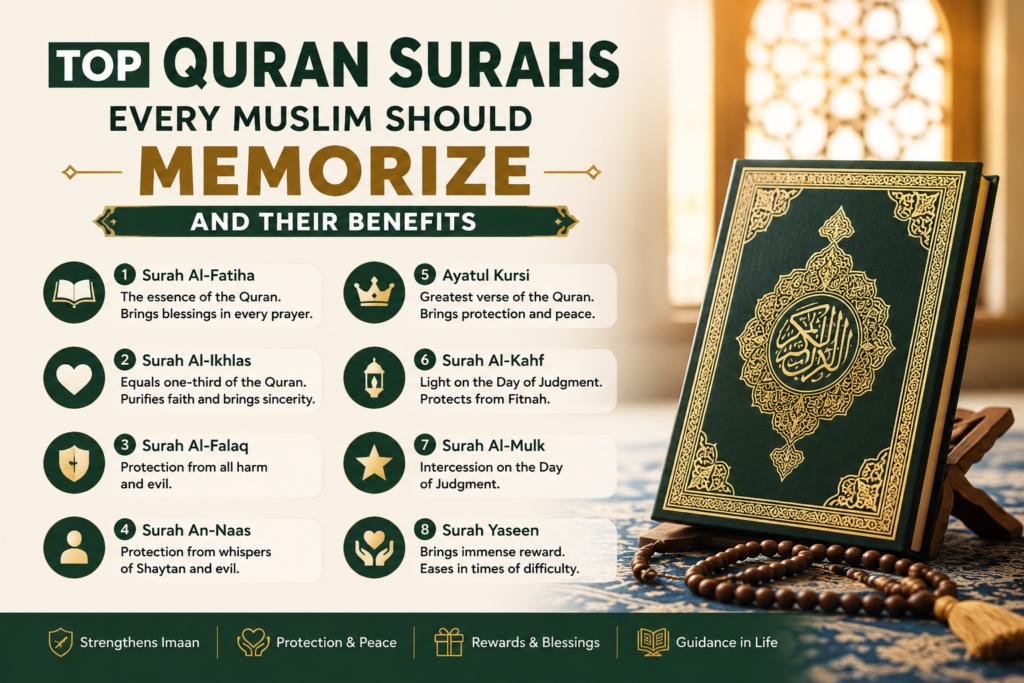
The most important Quran Surahs every Muslim should memorize include Surah Al-Fatiha, Surah Al-Ikhlas, Surah Al-Falaq, Surah An-Naas, and Ayatul Kursi. These Surahs are short, easy to learn, and widely used in daily prayers. They also provide spiritual protection, strengthen faith, and are essential for every Muslim’s basic Islamic practice.
Featured Snippet
The top Quran Surahs every Muslim should memorize are Surah Al-Fatiha, Al-Ikhlas, Al-Falaq, An-Naas, and Ayatul Kursi. These Surahs are important for Salah, easy for beginners, and provide protection and spiritual benefits in daily life.
Why Memorizing Quran Surahs Is Important
Memorizing Quran Surahs is not only about recitation—it builds a strong connection with Allah ﷻ and helps Muslims live according to Islamic guidance.
Key reasons include:
- Strengthening daily Salah (prayer)
- Improving understanding of Islam
- Gaining spiritual protection
- Building a habit of Quran recitation
- Preparing for deeper Hifz learning
Best Surahs for Beginners to Memorize
For beginners, starting with short Surahs from Juz Amma is highly recommended. These Surahs are easy to memorize and frequently recited in Salah.
Short Surahs from Juz Amma
- Surah Al-Kawthar
- Surah Al-Asr
- Surah Al-Ikhlas
- Surah Al-Falaq
- Surah An-Naas
These Surahs help beginners build confidence and consistency in memorization.
Surahs Used in Salah (Prayer)
Certain Surahs are recited repeatedly in daily prayers, making them essential to memorize:
- Surah Al-Fatiha (recited in every unit of Salah)
- Surah Al-Ikhlas (common in Sunnah prayers)
- Surah Al-Kawthar
- Surah Al-Ma’un
- Surah Al-Nasr
Among them, Surah Al-Fatiha is the most important because no prayer is valid without it.
Surahs for Protection in Islam
Some Surahs are known for spiritual protection from harm, evil, and negativity.
Surah Al-Ikhlas
Declares the oneness of Allah and strengthens Tawheed (faith).
Surah Al-Falaq
Protection from external harm, jealousy, and evil forces.
Surah An-Naas
Protection from internal whispers and Shaytan.
Ayatul Kursi
One of the greatest verses in the Quran, offering protection and blessings when recited daily.
Powerful Surahs with Great Benefits
Surah Al-Fatiha
Quran
Known as “The Opening,” it is the foundation of every Salah and a complete prayer for guidance.
Surah Al-Ikhlas
A short Surah but equal in reward to one-third of the Quran in meaning. It strengthens pure monotheism (Tawheed).
Surah Al-Falaq & An-Naas
These are called Al-Mu’awwidhatayn, used for protection from evil, jealousy, and harm.
Ayatul Kursi
Ayatul Kursi
The greatest verse in the Quran, recited for protection and blessings.
Easy Classification Table
| Category | Surahs |
| Salah Surahs | Al-Fatiha, Al-Ikhlas |
| Protection Surahs | Falaq, Naas, Ayatul Kursi |
| Beginner Surahs | Al-Kawthar, Al-Asr, An-Nasr |
Tips for Memorizing Quran Easily
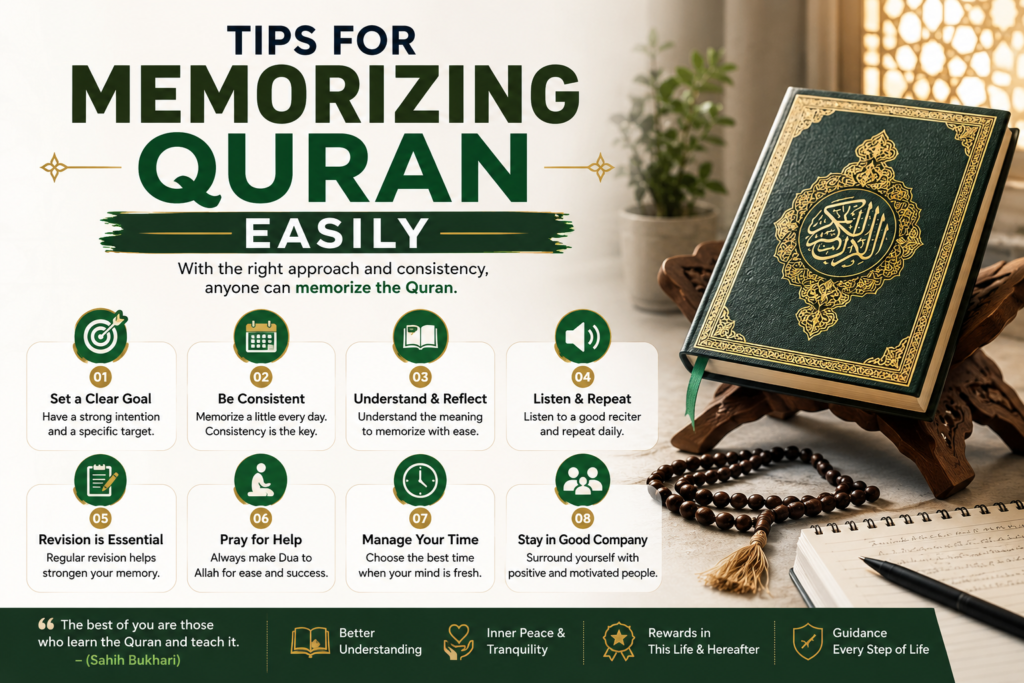
Memorization becomes easier with consistency and the right method:
- Start with 1–2 verses daily
- Repeat after Fajr (best time)
- Listen to recitation repeatedly
- Revise old Surahs regularly
- Understand meaning for better retention
- Use Tajweed rules correctly
For structured learning, beginners can follow:
Common Mistakes in Memorization
- Memorizing without revision
- Ignoring pronunciation (Tajweed)
- Rushing without understanding
- Not practicing in Salah
Avoiding these mistakes improves long-term retention.
Frequently Asked Questions (FAQs)
Which Surah should I memorize first?
Surah Al-Fatiha is the best starting point, followed by short Surahs from Juz Amma like Al-Ikhlas and Al-Kawthar.
What is the easiest Surah in the Quran?
Surah Al-Kawthar is considered one of the easiest due to its very short length.
Why is Surah Al-Fatiha important?
It is recited in every unit of Salah and is considered the essence of the Quran.
Which Surahs protect from evil?
Surah Al-Falaq, Surah An-Naas, and Ayatul Kursi provide spiritual protection.
How can I memorize Quran faster?
Consistency, repetition, listening, and understanding meaning are key methods.
Key Takeaways
- Start with short Surahs from Juz Amma
- Surah Al-Fatiha is essential for every Muslim
- Protection Surahs are Al-Falaq, An-Naas, and Ayatul Kursi
- Daily revision is crucial for retention
- Memorization strengthens faith and Salah
Conclusion
Memorizing Quran Surahs is a lifelong spiritual journey that brings peace, guidance, and reward. By starting with short and meaningful Surahs, every Muslim—whether child or adult—can build a strong foundation in Quran learning.
Consistency matters more than speed. Even a few verses a day can lead to strong memorization over time with sincerity and effort.
To continue your Islamic learning journey, you may also like our guides on [Is Qurbani Mandatory or Sunnah? Complete Islamic Ruling Guide], [Eid al-Adha Duas and Prayers (Arabic, Takbeer & Qurbani Dua)], and [Is Dua Qunoot Mandatory in Witr Prayer? IEN]. Exploring related topics can help you build a stronger understanding of Islam, the Quran, and everyday Islamic practices.